As I was going out to feed the horses this morning, I saw a lot of dead leaves on the ground. As I was thinking about when I would find time to rake and what to do with them, I stepped in a pile of manure (because apparently it's funny to them to go right by the gate). That did, however, get me thinking about October gardening and composting. Here are a few tips for October Gardening:
1. Plant trees, shrubs, and roses
- October is an ideal time to plant deciduous trees, shrubs, and roses. The cool weather encourages plants to root quickly and the soil is can be easier to work than when it's cold and murky in the spring. Dig a hole slightly larger than the root of the ball of the plant, set the plant in the hole at the same height is was growing in the pot, and water.
2. Divide Perennials
- Many perennials benefit from being divided every few years. Left to their own devices, some plants become overgrown and slowly die out from the center. Perennials that prefer being divided in October include Asiatic and Oriental lily, hota, peony, daylily, bearded iris, Oriental poppy, and sedum. Use a sharp spade to dig around the plant and lift it from the ground. Then, use your spade or sharp knife to divide the plant into smaller pieces. Replant them at the same depth they grew previously, buy space them apart to give them room to grow.
3. Add Bulbs to Your Landscape
- Spring flowering bulbs such as tulips, daffodils, and crocus should be planted in October and November. Larger bulbs are best planted 8 inches deep; smaller bulbs 4 inches deep. For a natural, informal look toss your bulbs over the garden bed and plant them where they fall. If you want a more dramatic display, plant your bulbs in large drifts or clumps of the same color. If you want, tuck bulbs in your existing perennial border: In spring, bulbs will pop into bloom just as your perennial flowers break dormancy.
4. Store Pots in October
- Clean ceramic and clay pots and store them over the winter. If you leave them outdoors in a cold climate the could crack due to the freezing and thawing temperatures over the winter. Remove the dead plants and dumps the soil. Ten use a garden hose and scrub brush to remove any remaining soil or insect pests. Once the pots are dry, store them in a protected shed or garage until spring.
5. Mulch in October
- One of the best ways to keep young plants alive over the winter is to cover them with mulch, especially the first year after planting. Spread a 4-6 in layer of shredded leaves, bark, or straw over the crown of the plant to protect it from freeze and thaw cycles. In the early spring, just as the plants break dormancy, gently rake the mulch away and spread it throughout your bed to keep weeds at bay during during the summer.
6. Compost
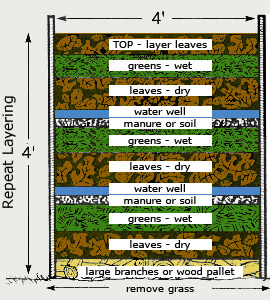
- If you don't have a compost pile, October is a great time to start one. Turn dead and dying foliage, weeds, and kitchen waste into a nutrient rich soil amendment. Just remember to layer woody and green materials, keep the pile slightly moist, and turn it once in a while to mix the contents. Below is a picture of a good layering system.
CSU has a great fact sheet about composting yard waste that you can download
here.
For more tips, contact the Extension Office and we will get you in touch with one of our wonderful Master Gardeners. Also, if you have interest in becoming a Master Gardener, the application deadline for 2019 training is Thursday, October 25, 2018.


 Boxelder
 Conifer Seed Bug
 Elm Leaf Beetle
 Root Weevils